Connecting molecular design with research validation

Bringing multi-property design, computational assessment and experimental feedback to antibodies, peptides, nucleic acids and target discovery.

Antibody · Molecular design

Co-designing antibody properties

Bring binding, molecular stability and developability into a shared design process, connecting sequence exploration, structural assessment and experimental feedback.

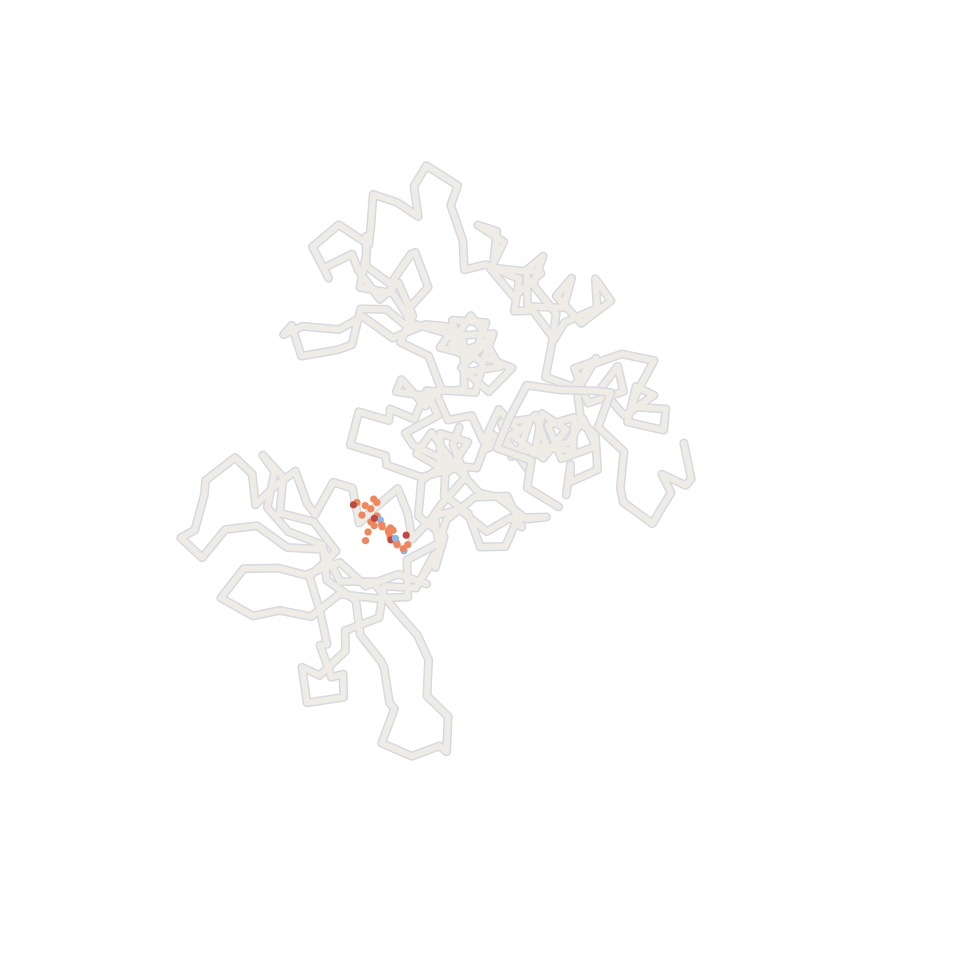
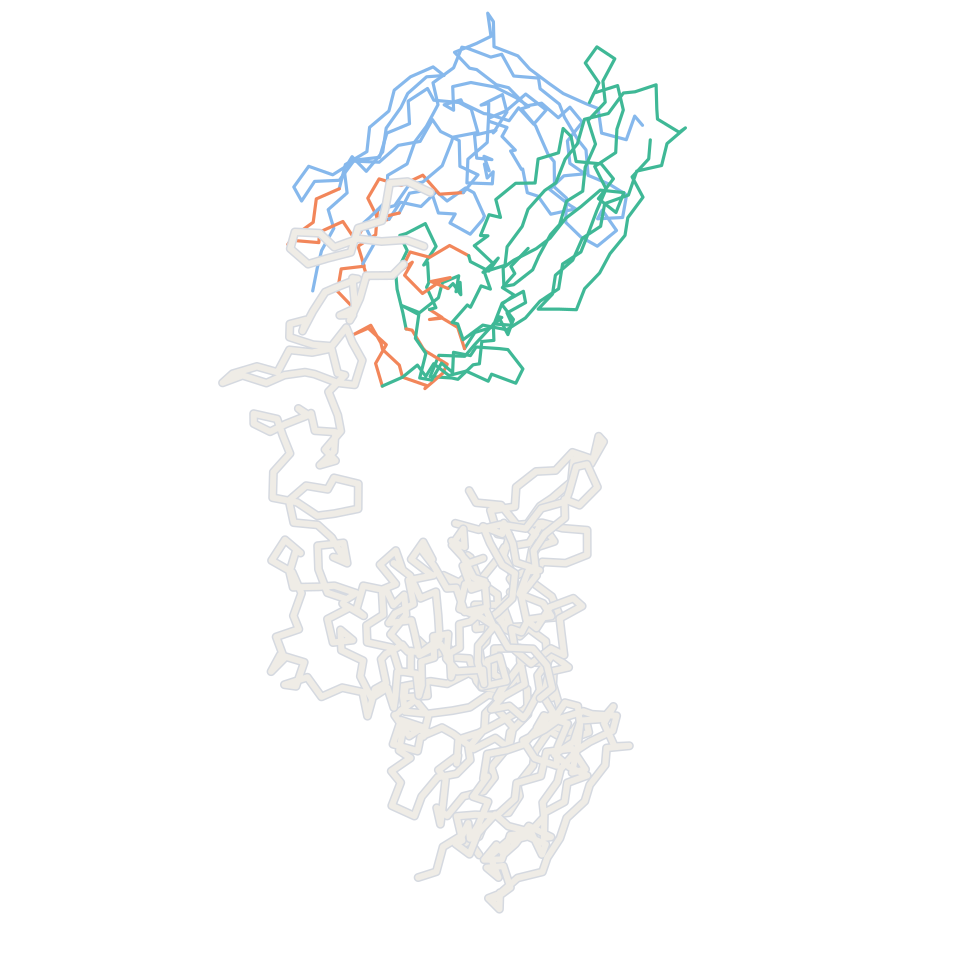
Explore antibody candidates through generative modeling and multi-property assessment. Bring research constraints into early design and use computational screening and functional validation to guide successive iterations.

  • 3 weeks

    Candidate screening completedHER-2 case
  • 0.74 nM

    Predicted KD of the best antibodyHER-2 case · predicted · Herceptin 1.44 nM
  • >20%

    Validated hit rateHER-2 case · experimental validation
  • 40%

    Higher tumor-cell killing than Herceptin in CDCHER-2 case · one candidate · in vitro CDC assay

Research focus: antibody design and functional assessment

Peptide · Sequence exploration

Exploring peptide activity and compatibility

Explore amino-acid sequence function and properties together, considering activity and cellular compatibility during candidate design.

Connect sequence generation, multi-objective screening and experimental assessment to explore peptide candidates under research-specific constraints. Use experimental feedback to refine subsequent design decisions.

  • 4µg/ml

    MIC · E. coliMPOP-03 · in vitro · marketed AMP average 15–40 µg/ml
  • 8µg/ml

    MIC · S. aureusMPOP-03 · in vitro · marketed AMP average 10–30 µg/ml

Research focus: functional peptides and multi-objective optimization

Discovery · Target research

Finding research leads in omics and molecular networks

Connect omics, protein interaction networks and biological knowledge to support the exploration of disease-associated molecular mechanisms.

Organize candidate leads through multi-source analysis to inform risk-gene research and subsequent validation. Turn distributed evidence into research questions that can be investigated further.

  • EGFR · PCLO

    Potential high-risk genesClear cell renal cell carcinoma case

Research focus: omics analysis and candidate target exploration

RNA · Sequence design

Designing mRNA under multiple constraints

Explore stability, translation efficiency and immunogenicity together in sequence design, considering the balance between competing properties.

Combine generative modeling and evolutionary optimization to explore sequences for a research objective. Use multi-property assessment to compare and refine candidates before subsequent validation.

  • 0.332

    5-D hypervolume, multi-property compositemRNA case · benchmarks GEMORNA 0.283 · LinearDesign 0.259
  • 17%

    Higher than GEMORNAmRNA case · 5-D hypervolume
  • 28%

    Higher than LinearDesignmRNA case · 5-D hypervolume

Research focus: multi-property mRNA design

Related research highlights

  • West China Hospital, Sichuan University
  • Peking University
  • Northwestern Polytechnical University

Selected research

  1. DualGPT-AB: A Dual-Stage Generative Optimization Framework for Therapeutic Antibody Design

    Published in Nature Computational Science, 2026

  2. Identifying Potential Risk Genes for Clear Cell Renal Cell Carcinoma with Deep Reinforcement Learning

    Nature Communications

  3. CellAgent: LLM-Driven Multi-Agent Framework for Natural Language-Based Single-Cell Analysis

    ICLR

  4. DeepRisk: A deep learning approach for genome-wide assessment of common disease risk

    Fundamental Research

  5. A Multi-Property Optimizing Generative Adversarial Network for de novo Antimicrobial Peptide Design

    Advanced Science

Built on algorithm research

Research in molecular generation, multi-property optimization and multi-agent collaboration connects data, models and research tasks to advance molecular design for biomedicine.

  • Multi-property modelingResearch constraints considered during generation
  • Molecular generation and optimizationExploring sequence and structure spaces
  • Data and knowledge iterationConnecting research data with experimental feedback
  • Multi-agent collaborationConnecting task planning with analysis tools

Take the next step in your research

Request a trial or Book a consultation. Tell us what you are working on.